
Can You Insulate Fire Sprinkler Pipes Without Violating Code?
In unheated warehouses, parking garages, or vacation homes that are occupied only occasionally, frozen fire sprinkler pipes are certainly a possibility. This is a concern for two reasons: Frozen pipes increase the pressure within the system, potentially causing the pipes to burst. When the temperature rises and the pipes thaw, water flows from the burst […]
Does My Commercial Building Need a Fire Sprinkler?
If you’re constructing or renovating a commercial building in Houston, you may be wondering whether you need to install a fire sprinkler system. You want to protect your building, people, and merchandise, but you also have a budget to abide by. So, when are fire sprinklers required in commercial buildings? There are several scenarios which require […]
Do You Need a Booster Pump for Your Fire Sprinkler?
According to NFPA 13D, there are five acceptable sources of water you can use for your fire sprinkler system: A reliable waterworks system that provides suitable pressure and volume to your home or building, not just the street An elevated water tank A pressure tank with a reliable pressure source A stored water supply with […]
What is UL 864?
UL 864 has been the “Standard for Control Units and Accessories for Fire Alarm Systems” since 1948. Over the years, new editions have made slight changes to the standard. However, the most recent Ninth Edition made approximately 300 revisions to the standard and added 100 new pages of requirements to UL 864.
To understand more about this publication from the Underwriters Laboratories Inc., you need to know its history, the changes executed in the Ninth Edition, and how all this information is useful for business owners.
When Should I Replace My Halon Fire Suppression System?
If you have a Halon fire suppression system in your Houston property, it must have been installed before the Clean Air Act of 1994. After that, the new installations of Halon systems were banned. While Halon systems are no longer in production, it’s still legal to own and operate such a system if it was already in place before 1994.
No legislation has been passed regarding requirements to replace existing Halon fire suppression systems, but it can be a good idea for your company. Here’s more information about the chemical and how to go about replacing it.
What Can Accidentally Set Off a Fire Sprinkler System?
You may be under the false impression that installing a fire suppression sprinkler system is to choose water damage over fire damage. However, the fact is that sprinklers are not set off by smoke and, unlike in the movies, the sprinkler heads don’t trigger all at once. If these myths were true, you would be in danger of soaking all your possessions and company’s assets just by burning a piece of toast in the break room.
What Size Fire Extinguisher Do I Need?
Are you shopping for fire extinguishers for your Houston-area business? You may be surprised to find that one size doesn’t fit all. In fact, there are many different fire extinguisher sizes, weights, types, and extinguishing agents available. Use the information here to help you determine how big your fire extinguisher should be.
How to Refill an FM-200 Fire Suppression System
If your building or facility has an FM-200 fire suppression system in operation, you should already know that it is crucial to recharge (or refill) the system as soon as possible after every use or discharge. A properly working system should respond to even a small electrical fire within seconds. It works by immediately reacting and diffusing the fire before it has time to do more damage to your computer room, data center, archives storage, etc.
Because the system reacted and put out the fire, it now is not as prepared to extinguish the next fire—unless you get it recharged. With no FM-200 gas to discharge, even another small fire could lead to great property loss or damage if it cannot be contained as quickly as it would with a working fire suppression system.
Is It Illegal to Pull a Fire Alarm When There’s No Fire?
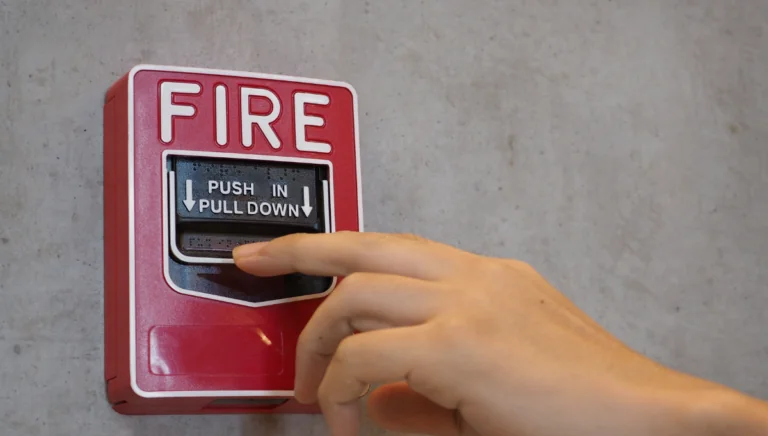
All You Need to Know About Fire Alarm Inspections Fire alarm inspections follow the National Fire Protection Agency (NFPA) 72 National Fire Alarm Code, which covers the application, inspection, testing, location, performance, and maintenance of fire alarm systems. While this code establishes the minimum level of performance required by your system, it doesn’t specify how to […]
Fire Sprinkler Spacing, Coverage Area, and Head Placement
At Kauffman Co., we believe that an intelligently designed sprinkler system is the single most important thing you can have in your building to keep it safe from fires at all times. And the most important aspect of fire sprinkler installation is making sure your sprinkler heads are located in the proper places to provide the best coverage.
What Happens During a Fire Alarm Inspection?
Your building’s fire alarm is one of its most important components. Without it, you can place yourself and your building’s occupants at increased risk during a fire event. Part of ensuring the health of your fire alarm system is performing routine inspections. But what does a fire alarm inspection actually entail, and how frequently are they needed? Kauffman Co. covers all this information and more in the sections below!
Why Does My Fire Alarm Keep Going Off for No Reason?
We can all agree that fire alarms are essential for keeping you safe in the event of a disaster in your home. But sometimes, they work a little too well! It’s not unheard of for fire alarms to go off when there’s no danger present. Does this mean your fire alarm is defective? Maybe — […]