
When your fire alarm system needs attention, you shouldn’t have to chase down three different contractors to sort it out. Kauffman Co. handles fire alarm systems from design through ongoing maintenance for building owners, property managers, HOAs, condo associations, and commercial facilities across the greater Houston area.
We’re licensed, local, and straightforward.
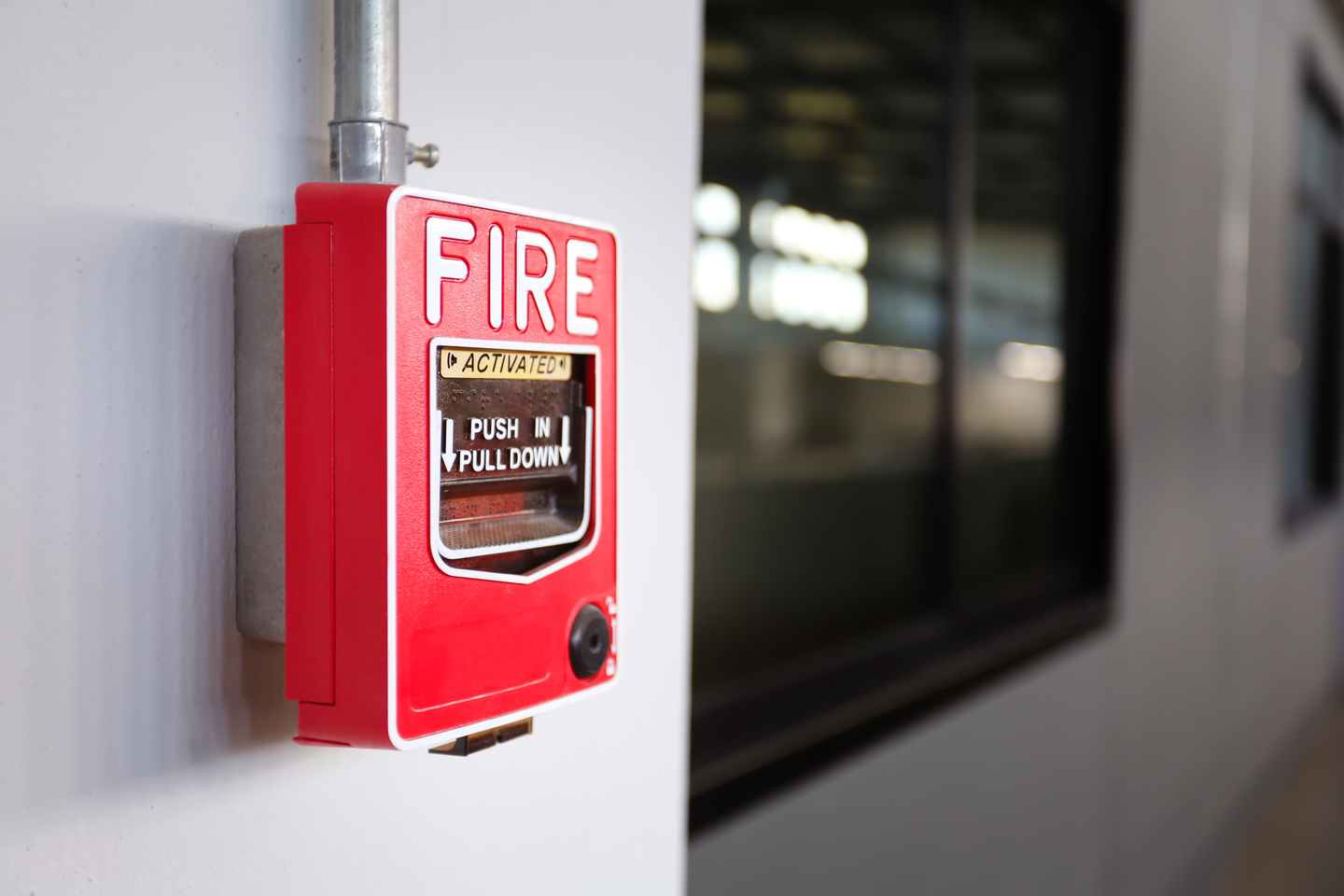
Whether you’re putting up a new building or keeping an existing system compliant, our licensed team handles it all.
A fire alarm system is only as reliable as the installation behind it. We handle everything—from initial system design to permit acquisition, final installation, and testing—for new construction and retrofits of existing buildings. Every component is installed by our licensed technicians. No subcontractors.
Once the system is in, we stay on as your service partner for inspections, maintenance, and repairs. You won’t be handed off to someone who’s never seen your building before.
Learn more: Fire Alarm Installation
The Texas fire code requires a full inspection and testing of your fire alarm system every year, performed by a licensed professional. Our technicians test every device, inspect the control panel, document deficiencies, and deliver the paperwork your fire marshal and insurance carrier require.
If something’s off, we handle it on the spot. No second calls.
Learn more: Fire Alarm Inspection & Testing
A fire alarm that alerts occupants but doesn’t notify the fire department is only doing half the job. Our 24/7 central station fire alarm monitoring in Houston ensures the fire department is dispatched the moment an alarm activates, whether your building is full of people or locked up for the night.
For after-hours emergencies, our team is reachable around the clock at (713) 937-4144.
Learn more: Fire Alarm Monitoring
Trouble conditions, failed devices, panel faults—fire alarm problems don’t wait for business hours. Our licensed technicians handle both emergency and scheduled repairs. Because we’re often the same team that installed the system, we can diagnose problems faster than a contractor seeing it for the first time.
Learn more: Fire Alarm Repair
Older fire alarm systems don’t fail all at once. They get unreliable gradually. Panels age. Replacement parts become unavailable. Code requirements change. If your system is generating nuisance alarms, struggling through annual testing, or running hardware that manufacturers no longer support, it’s time to have a conversation about upgrading.
We’ll assess your existing system, identify what needs to be replaced versus what can stay, and give you a clear picture of what an upgrade involves before any work starts. For buildings with condo association or HOA oversight, we’re familiar with the approval and documentation process for those projects.
Before we put a number together, we research the applicable code requirements for your building, assess wiring routes and installation scope, verify current material costs, and compare design options. The result is an estimate built on what your building needs. Not a ballpark that grows into a problem once the job starts.
Learn more: Fire Alarm Estimates
A fire alarm system is more than a horn and a strobe. A complete commercial system integrates multiple devices working together to detect a fire, alert occupants, notify the fire department, and document the event. Here’s what that typically includes:
Smoke detectors.
The primary detection device. Available in photoelectric and ionization types, depending on the fire risk. (See system types below.)
Heat detectors.
Trigger based on temperature rather than smoke. Used in environments where smoke detectors would cause nuisance alarms, such as commercial kitchens and dusty industrial spaces.
Pull stations.
Manual call points allow occupants to trigger the alarm immediately.
Horn/strobes and notification appliances.
Audible and visual devices that alert building occupants to an emergency. Placement and coverage are governed by code.
Fire alarm control panel (FACP).
The brain of the system. It receives signals from all connected devices and initiates the appropriate response.
Annunciator panels.
Secondary display panels that show alarm status by zone or device location. Common in larger buildings where the main panel isn’t accessible from the primary entry point.
Duct smoke detectors.
Mounted in HVAC ductwork to detect smoke traveling through air handling systems. Required in most commercial applications.
Waterflow switches.
Tied to sprinkler systems. These alert the panel when water begins flowing through the sprinkler piping, signaling that a head has activated.
Booster panels.
Used in large or multi-building applications where additional power is needed to support the full device load.
Wireless components.
Battery-powered devices that communicate via radio frequency rather than hardwiring. Commonly used in retrofits where running new wire isn’t practical.
Every system we design is laid out to match your building’s specific occupancy type, square footage, and use. That’s the work we do before the first device goes on the wall.
Not every fire burns the same way, and not every building has the same detection needs. Choosing the right system comes down to how your building is used and what fire risks are present.
For most commercial properties, we recommend combining both ionization and photoelectric detection to cover the full range of fire types your building is likely to face. We’ll tell you exactly what your building needs, not what’s simplest to install.
Photoelectric detectors use a light beam to sense smoke particles. When smoke enters the detection chamber, it scatters the beam, triggering the alarm. They respond well to slow, smoldering fires—electrical fires that start behind walls, overheating equipment, smoldering materials. A strong choice for office buildings, multifamily residential properties, condo associations, and HOA-managed buildings where occupants may be asleep when a fire starts.
Learn more: Photoelectric Smoke Detectors
Ionization detectors sense changes in an electrical current inside the detector. When smoke particles enter, they disrupt the current and trigger the alarm. They respond faster to fast, flaming fires—kitchen fires, trash fires, open flame events—making them a better fit for warehouses, manufacturing facilities, and open commercial spaces.
Learn more: Ionization Smoke Detectors
In an addressable system, every device on the network has a unique identifier. When a detector or pull station activates, the panel shows exactly which device triggered the alarm and where it’s located. For the fire department, that information matters. They go straight to the source instead of searching floor by floor. Addressable systems are standard for multi-story buildings, hotels, large multifamily properties, and any facility where locating the alarm source quickly is critical.
Conventional systems divide a building into zones. When a device activates, the panel identifies the zone, not the device. They’re simpler, lower cost, and well-suited to smaller buildings or single-tenant spaces where a zone is small enough that finding the source isn’t a problem. For a small retail space, a conventional system is usually the right call. For a six-story building, it isn’t.
We install fire alarm systems from manufacturers we trust to perform.
Potter is one of the most recognized names in fire safety. We install Potter smoke detection and commercial fire alarm equipment across a range of building types. Their products are well supported, widely stocked, and built to meet commercial code requirements.
Autocall specializes in advanced commercial fire detection and is engineered for early warning and reliability in demanding environments. This includes large facilities, complex layouts, and applications where false alarms are as much of a concern as missed ones.
Learn more: Autocall Fire Alarms
Per Texas fire code, commercial fire alarm systems require a full inspection and testing service every year, performed by a licensed fire alarm contractor. Beyond that annual requirement, here’s what a complete maintenance schedule looks like:
Frequency |
What’s Required |
|---|---|
| Monthly | Visual check by facility staff: no obstructions, no trouble lights, devices intact |
| Annually | Full inspection and testing by a licensed professional, including panel inspection and deficiency documentation |
| Every 2 years | Battery replacement (varies by system and manufacturer) |
| After any alarm event | Full system check and documentation before reset |
Your fire marshal expects documented annual inspections. So does your insurance carrier. If your last contractor let that schedule slip, it’s worth getting back on track before your next deadline.
The complaint we hear most from new clients is simple: their last fire alarm contractor did the installation, then became difficult to reach. Calls went to voicemail. Inspection deadlines crept up. Small problems turned into bigger ones.
We built our business around avoiding that pattern.
Every service visit is handled by a licensed fire alarm technician. Not a trainee, not a subcontractor.
We design, install, inspect, monitor, and repair the systems we put in. You’re not managing a handoff between an installation crew and a separate service company. One team. One point of contact.
After every inspection, you get the paperwork: inspection records, deficiency reports, and corrective action documentation. Everything your fire marshal and insurance carrier will ask for. Ready when they ask for it.
Fill out a form on our site and expect a callback within 24 hours. For emergencies, we’re available around the clock at (713) 937-4144.
The team that installs your system is the team that services it. That matters when something goes wrong and the technician on the other end of the line needs to know your system without having to start from scratch.
Need more than fire alarm service?
Kauffman Co. is your single point of contact for complete fire protection: sprinkler systems, fire suppression, fire pumps, fire extinguishers, and more. All available with one call.

Houston | Galveston | Conroe | Baytown | Beaumont | Friendswood | Deer Park | Pasadena | Katy | Sugar Land | The Woodlands | and dozens of other communities across Texas
Don’t wait until a failed inspection or a fire marshal visit to find out your system isn’t up to code. Kauffman Co. provides complete fire alarm system services across the Greater Houston area. One licensed team. No subcontractors.
Call us today: (713) 937-4144 or complete the contact form for a callback within 24 hours.
The information on this website is for informational purposes only; it is deemed accurate but not guaranteed. It does not constitute professional advice. All information is subject to change at any time without notice. Contact us for complete details.