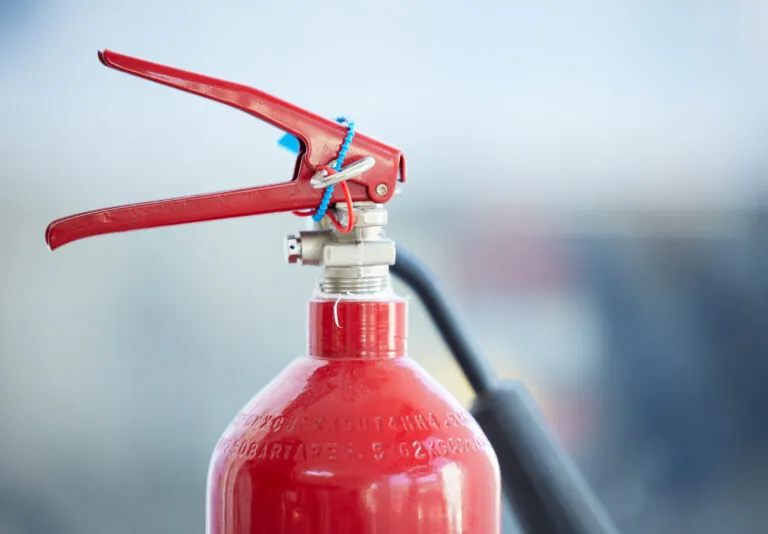
Why Fire Extinguisher Maintenance Matters
A fire extinguisher is only useful if it works the moment someone grabs it. Parts can corrode, pressure can drop, and labels can fade. Dust, paint, or clutter can also block access without anyone noticing. Inspections catch those issues early, so a small flame doesn’t turn into a major loss. They also protect your business from fines, insurance issues, and downtime caused by failed safety audits. Routine attention keeps your facility safer, your records cleaner, and your liability lower.
Monthly Visual Checks
Most Texas businesses follow NFPA 10 as the baseline standard for portable fire extinguishers. It calls for a simple monthly inspection. This isn’t a full-service visit. It’s a quick visual check that can be handled in-house by trained staff. During these monthly checks, confirm every extinguisher is easy to reach, not blocked, and shows no obvious damage or rust. The gauge should sit in the green zone, the pin should be secure with a tamper seal, and the label should be readable. If you spot dents, leaks, or missing parts, tag the unit for service instead of ignoring it.
Keep a log of your monthly inspections. Many businesses initial and date the back of each tag, or track checks in a simple spreadsheet. Inspectors want to see a pattern, not a single entry made the day before an audit. Under NFPA extinguisher rules, the monthly inspection is part of proving your extinguishers are present and ready, not just purchased and forgotten.
Annual Professional Inspections and Tagging
Once a year, schedule a licensed fire protection company to conduct a full fire extinguisher inspection in Texas. The state-certified inspector checks each extinguisher’s condition, confirms it fits the hazard where it’s mounted, and verifies that it is mounted and labeled correctly. They will review the gauge or weight, inspect the hose and nozzle, and look for corrosion or damage that could keep the extinguisher from working.
Inspection time is when your documentation is evaluated. Many commercial extinguisher requirements come down to proof: a current service tag, a clear date, and a technician who is properly licensed to perform the work. After service, the inspector attaches a new inspection tag showing the month, year, and their licensing details. If the extinguisher fails inspection, it must be repaired, recharged, or replaced before it gets a fresh tag. If your tags are expired, missing, or unreadable, expect that to come up during a fire marshal visit.
Different Extinguisher Types and What Inspectors Look For
Texas businesses use several types of extinguishers depending on what’s inside the building. ABC dry-chemical units are common in offices, warehouses, and retail spaces. CO2 models show up in electrical rooms and server areas because they leave no residue. Class K units belong in commercial kitchens and restaurants to handle cooking oil and grease fires. Some industrial sites also need Class D units for combustible metals, or clean-agent extinguishers for sensitive equipment.
For CO2 units, weight matters since many don’t have a pressure gauge. A unit can look “fine” at a glance and still fail when weighed, inspected closely, or compared to the hazard it’s meant to protect against.
Common Compliance Problems
Most violations are small and easy to avoid. Extinguishers blocked by boxes, displays, or pallets are one of the most common issues. Expired tags come next, followed by extinguishers mounted too high or too low. During remodeling, extinguishers sometimes get moved and never remounted correctly. In kitchens, the wrong extinguisher type is a frequent problem, especially when a Class K unit is missing or outdated for the cooking setup. When your program follows Texas fire code extinguisher standards, you also eliminate the need for citations that can lead to re-inspections, deadlines, and disruptions.
Your Safety Comes First
Choose dependable fire protection services from Kauffman
Schedule Fire Extinguisher Service in Texas
Fire safety should never be a last-minute task. With monthly visual checks, yearly professional inspections, and updated tags, your business can meet requirements without stress.
At Kauffman Co., we help Texas businesses handle extinguisher inspections, recharging, replacements, and compliance documentation that holds up during facility evaluations. Contact Kauffman Co. today to keep your workplace ready all year long.
What types of commercial buildings does Kauffman Co. service?
Kauffman Co. provides fire protection services for a wide range of commercial and industrial facilities, including office buildings, warehouses, retail centers, manufacturing plants, medical facilities, schools, data centers, restaurants, and multi-use properties. We work directly with developers, construction managers, building owners, and facility managers across Texas.
How often should commercial fire protection systems be inspected in Texas?
NFPA standards require most commercial fire protection systems to be inspected on a monthly, quarterly, semiannual, and annual schedule depending on the system type. Local AHJ requirements may mandate additional inspections. Kauffman Co. performs all required NFPA- and AHJ-compliant inspection, testing, and maintenance (ITM) to keep your facility in compliance.
Can Kauffman Co. provide both design and installation for new construction projects?
Yes. Kauffman Co. offers full design-build services, including system engineering, submittals, BIM coordination, and professional installation for new commercial construction projects. Our team ensures your fire protection system is designed to meet project specifications, NFPA standards, and local code requirements.
Do you offer emergency fire protection repairs and troubleshooting?
Yes. Kauffman Co. provides 24/7 emergency fire protection services for system failures, alarms, leaks, and other urgent issues. Our technicians can identify the cause, make on-site repairs, and help restore your system to safe operating condition.
What fire codes and standards do your services follow?
Kauffman Co. follows all applicable NFPA codes, Texas fire safety requirements, and local AHJ guidelines. Our work aligns with standards for fire sprinklers, fire suppression systems, fire alarms, portable extinguishers, and the mandated inspection/testing schedules required for commercial compliance.