
Not every fire starts the same way, and not every building faces the same risk. A restaurant kitchen deals with grease fires that move fast and stay hot. A server room needs suppressions that won’t destroy the equipment it’s protecting. A warehouse storing flammable materials is a different problem entirely. That’s why commercial fire suppression system design isn’t one-size-fits-all. The right system depends on what you’re protecting, how your building is used, and what Texas fire code requires for your occupancy type.
Kauffman Co. handles the full scope of fire suppression system service for commercial properties across the Greater Houston area – design, installation, inspection, and repair. From the initial consultation to the annual compliance visit, we manage every step. One contractor. One invoice. No runaround.
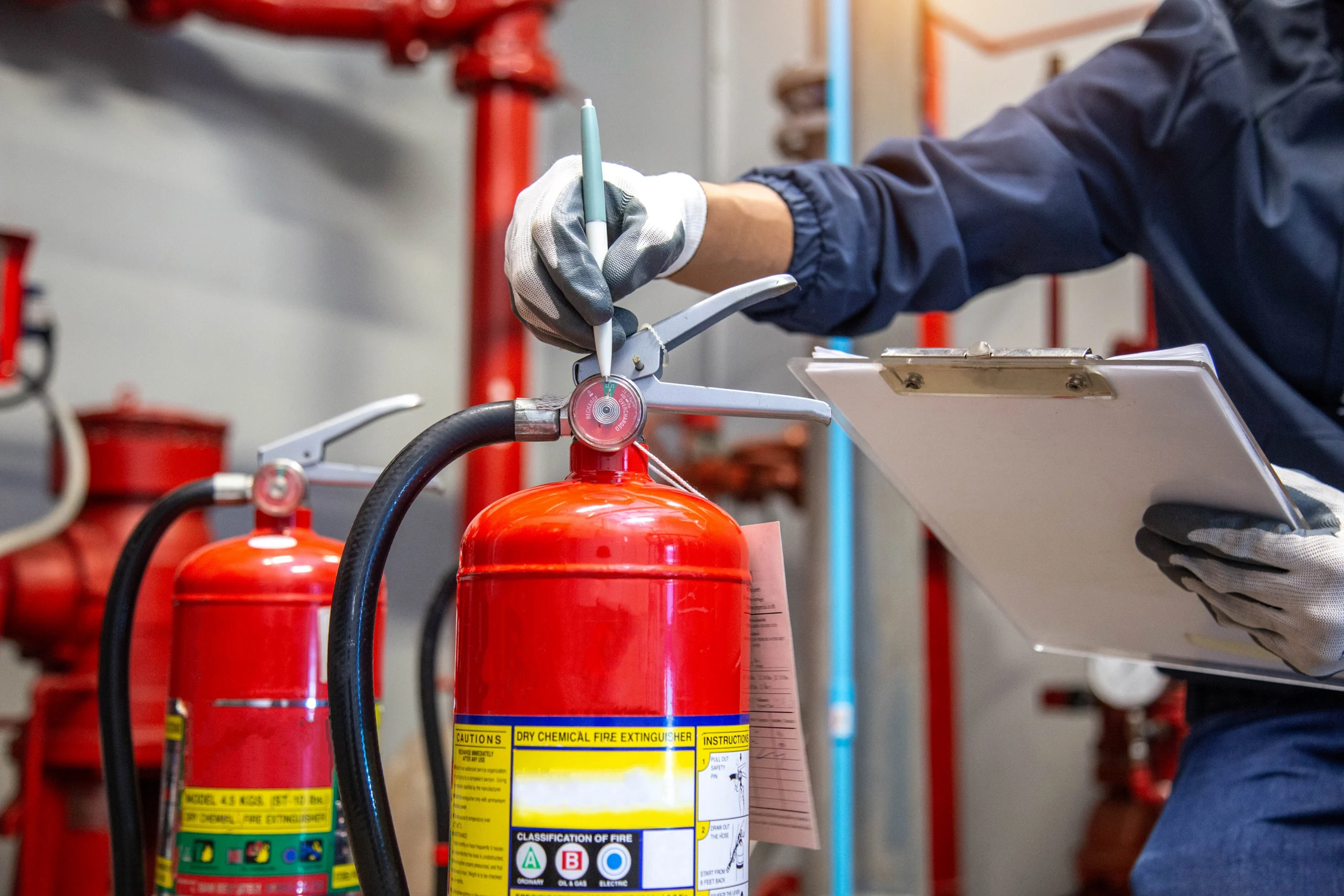
Whether you need a new system designed and installed, a failing component repaired, or your annual inspection scheduled before the fire marshal comes around, Kauffman Co. has you covered. We provide complete commercial fire suppression system services for restaurants, commercial buildings, industrial facilities, and more across the Greater Houston area.
A fire needs three things to burn: heat, oxygen, and fuel. Fire suppression systems work by disrupting one or more of those elements before a fire can grow. Depending on the system type, that might mean displacing oxygen with a clean-agent gas, smothering a grease fire with wet-chemical foam, or flooding an area with water mist to drop the temperature quickly. The right approach is matched to the specific hazard, which is why system selection matters as much as installation quality.
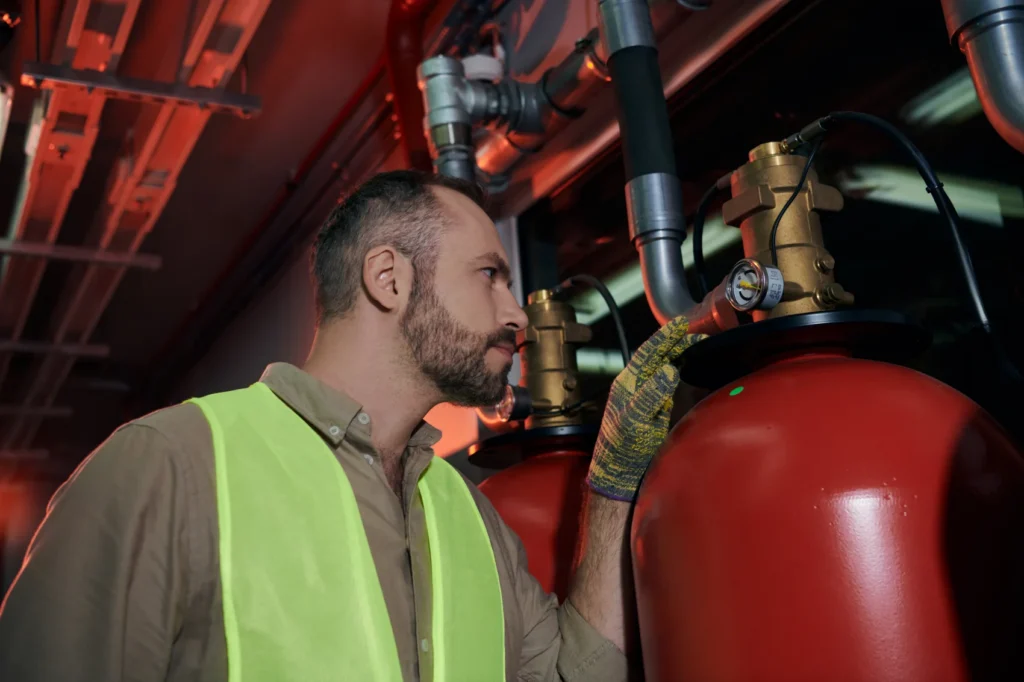
Different facilities call for different solutions. Here’s how the most common commercial fire suppression system types break down.
Commercial kitchens are the highest-risk fire environment in most buildings, and Houston has no shortage of them. Cooking oil and grease ignite fast, and a fire can jump to the exhaust hood and ductwork before anyone has time to react. Commercial kitchen fire suppression systems use wet chemical agents specifically formulated for grease fires, knocking them down and preventing re-ignition. Texas fire code requires these systems in commercial cooking operations. If you run a restaurant or manage a building with a commercial kitchen, routine inspection isn’t optional. It’s the law.
Foam systems are built for environments where flammable liquids are the hazard – fuel storage, industrial operations, and aircraft hangars. They smother a fire by blanketing it in foam, cutting off oxygen and preventing vapor re-ignition. It’s a heavy-duty solution for heavy-duty risks. Kauffman Co. installs, inspects, and services foam fire suppression systems across a wide range of commercial and industrial facilities throughout the Greater Houston area.
Server rooms and data centers can’t afford water damage on top of fire damage. Clean agent systems, including FM-200, discharge a gas that stops a fire at the chemical level, leaving no residue and triggering no sprinklers. Equipment stays dry. The space stays protected. These systems are designed to discharge in seconds, which matters when what you’re protecting can’t be easily replaced.
Learn More About FM-200 Systems
Water mist systems use high-pressure nozzles to produce fine droplets that cool a fire and displace oxygen at the same time. They use a fraction of the water that traditional sprinklers require. Less water means less collateral damage to the building and its contents. For facilities where suppression-related damage is a real concern, water mist is worth a serious look.
Texas fire code requires semi-annual inspections for most fire suppression systems – for good reason. A system that hasn’t been properly maintained may not discharge correctly when it counts. Kauffman Co. performs thorough fire suppression system inspections and testing to confirm that every component will do its job when needed.
When something is off, we document it and correct it before we leave. You get a complete service record ready for your insurance carrier or fire marshal. You won’t scramble when inspection time rolls around.
Kauffman Co. is a licensed, family-owned fire protection contractor serving the Greater Houston area since 2006. We work with building owners, property managers, restaurant operators, and facility teams who need a suppression contractor they can count on. Not one who shows up for the install, then disappears.
When a suppression system fails an inspection or goes down unexpectedly, you need a contractor who picks up the phone and gets there fast. Fire suppression system repair is part of what we do every day. Our technicians are available 24/7 for emergency service, and we stock parts for the most common commercial systems in the Greater Houston area.
From the initial design through every inspection and repair down the road, Kauffman Co. is your single point of contact for complete fire suppression service. We’re a licensed team that shows up and follows through.
We serve Houston and surrounding communities, including Galveston, Baytown, Beaumont, Conroe, Friendswood, Deer Park, Dickinson, Alvin, Angleton, Clute, Freeport, Galena Park, Humble, and Bellaire.
A commercial kitchen fire suppression system is a fixed system installed in your exhaust hood that discharges a wet-chemical agent when it detects a fire. The agent knocks down grease and oil fires and prevents re-ignition. The Texas fire code requires these systems in commercial kitchens, and inspections must be completed every 6 months. If your hood system hasn’t been checked in the last six months, it’s time to schedule service.
Most systems require inspection every six months under the Texas fire code. That includes kitchen suppression systems, clean agent systems, and foam systems. Depending on your occupancy type and local requirements, some systems may need more frequent service. Kauffman Co. tracks service schedules for our clients and provides documentation after every visit.
Sprinkler systems use water and are designed to cover large areas. Suppression systems use other agents – wet chemical, clean gas, or foam – and are installed in high-hazard areas where water would be ineffective or cause damage. A commercial kitchen is a good example: water won’t reliably extinguish a grease fire, so a wet chemical suppression system is required. Many commercial buildings have both.
It depends on the system and what the inspection turns up. Common repairs include replacing detection devices or discharge nozzles, recharging agent containers, and correcting deficiencies noted during an inspection. Kauffman Co. handles repairs for commercial kitchen systems, clean agent systems, foam systems, and more. We’re available 24/7 for emergency repairs when something can’t wait until Monday.
Choose dependable fire protection services from Kauffman
The information on this website is for informational purposes only; it is deemed accurate but not guaranteed. It does not constitute professional advice. All information is subject to change at any time without notice. Contact us for complete details.