
When a fire extinguisher comes due for inspection, needs a recharge, or has to be replaced, you shouldn’t need to track down multiple vendors to sort it out. Kauffman Co. handles fire extinguisher service from start to finish for building owners, property managers, and businesses across the greater Houston area.
We’re licensed, local, and straightforward.
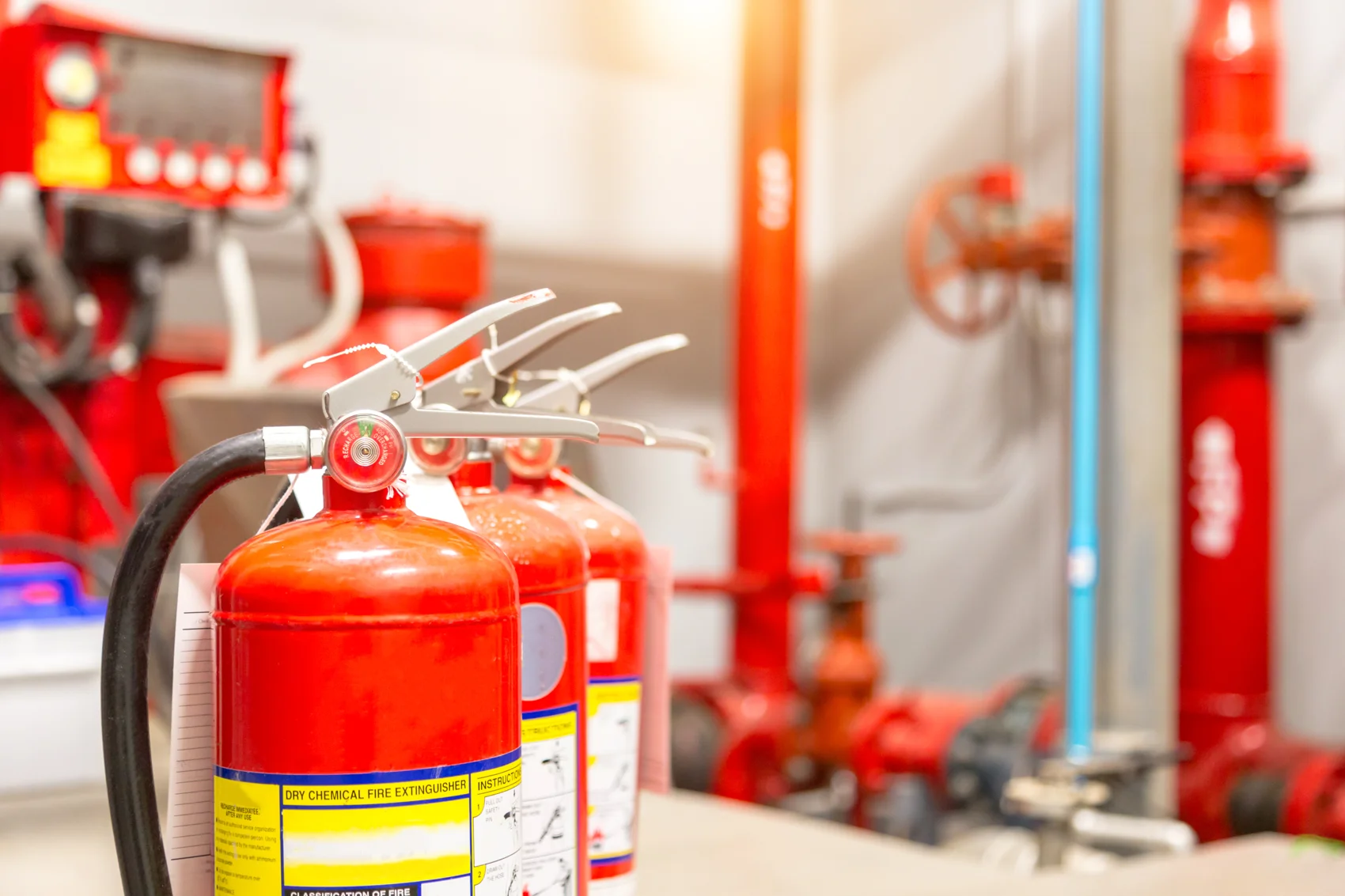
Whether you manage one building or twenty, our licensed team takes care of it all.
NFPA 10 and Texas fire codes require a full professional inspection every year. That means a licensed technician, not a walk-by from the maintenance crew.
Our inspectors check pressure and gauge readings, look for corrosion or physical damage, confirm mounting height and accessibility, and verify signage. Everything gets documented so you have the paperwork your fire marshal and insurance carrier expect. If something’s off, we handle it on the spot: recharge if pressure is low, replace if the unit is expired or damaged, or code correct if there’s a placement issue.
No surprises. No second calls.
Learn more: Fire Extinguisher Inspections
A discharged extinguisher, even one that was only partially used, can’t protect anyone until it’s recharged. The unit might look fine, but if the pressure isn’t there, it won’t perform when it counts.
We recharge all extinguisher types: ABC dry chemical, CO₂, Class K wet chemical, clean agent, and more. Every unit gets re-tagged with a current service date before it goes back on the wall.
Call us for a recharge if:
Learn more: Fire Extinguisher Recharge
A fire extinguisher refill puts the right extinguishing agent back in a discharged unit. We handle on-site and in-house refills for ABC, CO₂, clean agent, Class K, and other types. Every unit is pressure-tested and re-tagged before being returned.
Learn more: Fire Extinguisher Refills
Need to add units to your facility or swap out aging equipment? We stock a full range of extinguisher types and can point you toward the right one for your building, not just whatever’s easiest to grab off the shelf. Bulk purchasing is available for large properties and multi-building accounts.
Learn more: Fire Extinguisher Sales
Where you put an extinguisher matters as much as having one. Mounting height, travel distance from hazards, and signage all have specific requirements under NFPA 10. An extinguisher that’s blocked, mounted too high, or missing a placard is a compliance violation waiting to be found.
Our team handles installation for new construction, renovations, tenant buildouts, and unit replacements across commercial, industrial, residential, and institutional properties.
Learn more: Fire Extinguisher Installation
Some extinguishers can be recharged and put back in service. Others have reached the end of the road. We’ll give you a straight answer on which is which. We’re not going to push replacement if a recharge is the right call.
A unit typically needs to be replaced when:
We carry replacement stock and can have compliant units back in place the same day.
Learn more: Fire Extinguisher Replacement
Extinguisher cylinders take a beating over time: pressure cycles, temperature swings,the occasional bump or drop. Hydrostatic testing verifies the cylinder can still safely hold pressure. Per NFPA 10, CO₂ units need it every five years; most dry chemical units every twelve.
We perform the test, give you a clear result, and take it from there.
A fire extinguisher on the wall is only useful if someone knows how to use it. We offer hands-on training for commercial employees: live fire demos, PASS technique practice (Pull, Aim, Squeeze, Sweep), and emergency evacuation planning. Either at your facility or ours. It meets OSHA and NFPA requirements. It’s the kind of preparation that makes a difference when something goes wrong.
Learn more: Fire Extinguisher Training
Most fire protection companies don’t offer walk-in service. We do.
Bring your extinguisher to 13225 FM 529 Road, Suite A, Houston, TX 77041 at any time Monday through Friday, 8 AM-5 PM. We’ll inspect, recharge, refill, or replace it on the spot, usually in under 30 minutes. Got a BBQ competition coming up and need your station extinguisher recharged before the weekend? That’s exactly the kind of quick turnaround we’re set up for.
Walk-ins welcome Mon-Fri, 8 AM-5 PM at 13225 FM Road, Suite A, Houston, TX 77041.
Prefer to schedule online? Request service here.
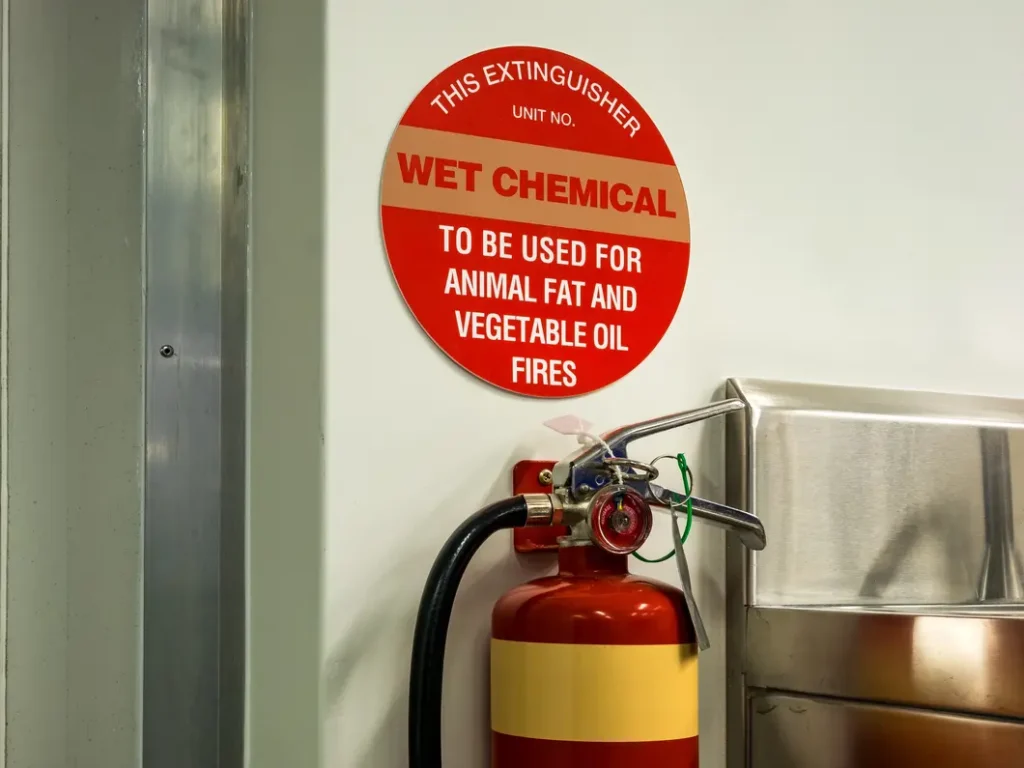
Not every extinguisher works on every fire, and using the wrong one can make things worse. A dry chemical unit on a grease fire covered by a kitchen hood system can disrupt the suppression foam, allowing the fire to burn. Water on a Class D metal fire can spread it. CO₂ near cooking oil can cause an explosion.
Choosing the right extinguisher for the right environment isn’t complicated once you understand the basics. We stock, install, and service the following:
The most common extinguisher in commercial use. For good reason. ABC units handle the fires most likely to happen in an office, warehouse, hotel, school, or retail space:
They use a dry chemical agent and work well in most general commercial settings. One thing to keep in mind: the residue is mildly corrosive and needs to be cleaned up after discharge. For rooms with sensitive electronics, a clean agent unit is a better choice.
Learn more: ABC Fire Extinguishers
Class K extinguishers are built specifically for commercial cooking environments where grease fires are the primary risk. They spray a fine mist of wet chemical agents that form a cooling, soapy layer over burning oil or fat, smothering the fire and preventing it from reigniting.
Every commercial kitchen is required by NFPA to have at least one Class K unit. They also need to be compatible with your existing wet chemical hood suppression system.
If your kitchen has an ANSUL-type hood, using a standard ABC extinguisher on a grease fire can actually interfere with the hood’s foam layer. It’s a detail that matters, and it’s why the right equipment selection is worth a conversation.
Learn more: Class K Fire Extinguishers
Dry chemical is the broader category that includes ABc units and several more specialized agents worth know about:
Learn more: Dry Chemical Extinguishers
Similar to Class K units in how they work, wet chemical extinguishers create a salt compound crust over burning oil that cuts off oxygen and cools the fuel at the same time. They’re rated for Class K forest and can also handle Class A fires, making them well-suited for restaurant kitchens.
Before wet chemical agents existed, grease fires were notoriously hard to control. CO₂ risked explosion, dry chemical spread burning grease, and water turned a bad situation catastrophic.
Learn more: Wet Chemical Extinguishers
Clean agent units are the right call for anywhere that secondary damage is as much of a concern as the fire itself:
The agent discharges as a gas, quickly knocks the fire down, and leaves no residue behind. No cleanup, no collateral damage.
Learn more: Clean Agent Extinguishers
Class D fires involve combustible metals: sodium, potassium, magnesium, titanium. And they show up almost exclusively in industrial facilities, chemical plants, and laboratories. Standard dry chemical agents don’t just fail on metal fires. They can make them worse.
Class D extinguishers use dry powder agents specifically formulated to smother the fire and absorb heat without aggravating the reaction.
If your facility works with combustible metals, Class D placement and employee training aren’t optional.
Learn more: Class D Fire Extinguishers
Per NFPA 10, commercial fire extinguishers follow a tiered maintenance schedule. Here’s what that looks like in practice:
Frequency |
What’s Required |
|---|---|
| Monthly | Visual check by trained facility staff; accessible, undamaged, gauge in the green |
| Annually | Full inspection by a licensed professional: pressure, condition, mounting, signage, documentation |
| Every 6 years | Internal maintenance for stored-pressure dry chemical units |
| Every 5 years | Hydrostatic testing for CO₂ units |
| Every 12 years | Hydrostatic testing for most dry chemical units |
| After any discharge | Recharge required, even partial use counts |
Put your annual fire extinguisher inspection on the maintenance calendar and let us handle whatever comes out of it. Clean, simple, and compliant.
Fewer places than you’d expect. Hardware stores sell disposable units and won’t touch a rechargeable canister. Most fire protection companies want to schedule a service call several days out.
Kauffman Co. offers same-day walk-in fire extinguisher recharge at our Houston location. No appointment needed. No waiting. We also handle scheduled service for facilities with multiple units. Not sure if your extinguisher can be recharged or needs to be replaced? Bring it in, and we’ll talk to you straight.
The complaint we hear most from new customers is simple: their last provider did the work but disappeared when something needed attention. That’s not how we operate.
Licensed technicians on every visit
Certified professionals handle every service call, not trainees.
Everything under one roof
Single recharge or a full annual contract across multiple properties, we manage it all.
Documentation you can count on
Inspection tags, service records, and deficiency reports, ready when your fire marshal or insurer asks.
Walk-in service
The only local provider with same-day drop-off, no appointment needed.
Code issues managed
If a fire extinguisher inspection turns up a violation, it gets taken care of. We can coordinate with code enforcement directly on your behalf.
No surprises, no excuses
On time, on quote, every time.
Need more than fire extinguisher service? Kauffman Co. is your single point of contact for complete fire protection: alarms, sprinklers, suppression systems, fire pumps, and more. No subcontractors. One invoice. One call. Complete fire protection.
We provide fire extinguisher service throughout the Houston area, including Houston, Galveston, Conroe, Baytown, Beaumont, Friendswood, Deer Park, and dozens of other communities across Texas.
Don’t put it off until your next inspection deadline. Or worse, until a unit fails when it matters most. Kauffman Co. is ready with fire extinguisher service across the greater Houston area.
The information on this website is for informational purposes only; it is deemed accurate but not guaranteed. It does not constitute professional advice. All information is subject to change at any time without notice. Contact us for complete details.