What an Inspection Covers and What It Misses
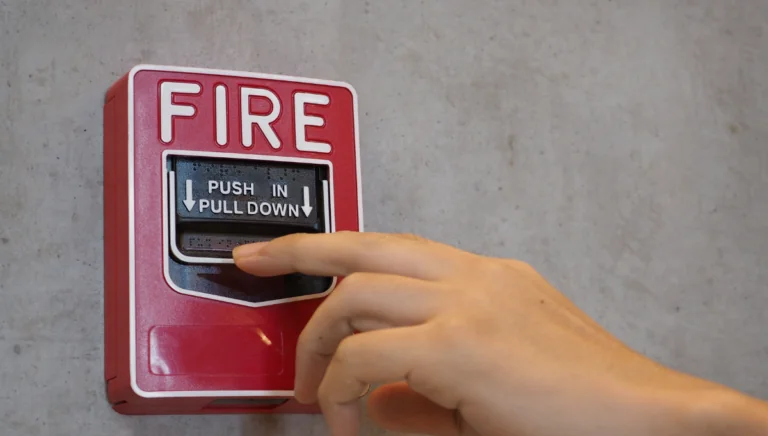
An inspection is the eyes-on check that looks for conditions that can undercut performance, even when the system seems quiet. You or your vendor reviews the control panel for trouble indicators, damaged buttons, missing labels, loose wiring at the door and signs of moisture or heavy dust. Power supplies and batteries get checked for age, swelling, corrosion and weak connections. Out in the building, devices get reviewed for placement and condition: a pull station blocked by stacked product, a horn or strobe hidden behind a new sign, a smoke detector painted during a remodel, a duct detector buried after ceiling work.
In industrial spaces, vibration, washdowns and heat can loosen covers or degrade devices faster than people expect. Fire alarm inspection requirements focus on catching these practical problems before they turn into a failed functional check or a real-life miss. Inspection still has a limit. It cannot prove audibility, signal transmission, programming logic or device activation. That proof comes from testing.
What Testing Proves, Step by Step
Testing answers one blunt question: when the system gets a real alarm or supervisory signal, does it respond correctly across the whole site. A proper test is not a quick look at the panel. Technicians activate initiating devices with approved methods, then confirm the panel receives the right signal and displays the correct location.
They verify notification appliances, like horns and strobes, operate as intended for the areas they cover. They also confirm communication to the monitoring company or supervising station. In many commercial and industrial buildings, the test extends into interfaces: elevator recall, door release hardware, fan shutdown, smoke control sequences, fire pump signals or suppression system connections.
That is why fire alarm testing vs inspection is not a picky distinction. One looks for visible issues. The other proves real function under simulated conditions. Fire alarm testing requirements also demand coordination, because testing can affect occupants, production schedules, security and building automation.
How Often You Need Each and Why Records Matter
Frequency is where many facility managers get tripped up, because not every device follows the same interval. Some items get checked monthly or quarterly, while many functional checks land on an annual cycle. Environment matters. Dusty fabrication areas, cold storage, high humidity rooms and locations with frequent impacts can call for tighter attention. Your schedule should match what your building has, how it runs and how often spaces change. A warehouse that rearranges racking every season has different risks than a quiet office floor.
Documentation matters as much as the work itself. Inspectors and testers should record what they touched, what passed, what failed and what got corrected. Those records support NFPA compliance, reduce insurance friction during renewals and help you answer questions after an alarm event.
Misconceptions That Create Risk When You Skip One
A common misconception is that a recent test means the system stays ready until the next scheduled date. Buildings change daily. A new tenant moves furniture, a contractor drills through a wall, a forklift clips a device, dust builds up after a renovation, or a door release gets swapped during access control work. Inspection catches these changes early, when the fix is small. Another misconception is that inspection alone proves readiness. A device can look fine and still fail to signal, fail to notify, or fail to communicate off site. Only functional testing can show that the system responds as programmed.
Missed inspection issues often show up later as nuisance alarms, impaired coverage or failed tests. Skipped testing can leave you with devices that never activate in a true emergency. NFPA 72 fire alarm testing exists because life safety depends on verified performance, not assumptions. When you treat inspection and testing as a paired routine, you protect occupants, support compliance and reduce unpleasant surprises during audits.
Clear Records Mean Real Readiness
Fire alarm inspection and testing work best as a pair: inspection catches visible problems early, and testing confirms the system performs under real conditions. At Kauffman Co., we support building teams with fire alarm inspections, scheduled testing, repairs when devices fail and documentation that’s easy to file and easy to present.
If you want a clean plan for staying compliant and confident in your fire alarm system, call Kauffman Co. today.
Your Safety Comes First
Choose dependable fire protection services from Kauffman
What types of commercial buildings does Kauffman Co. service?
Kauffman Co. provides fire protection services for a wide range of commercial and industrial facilities, including office buildings, warehouses, retail centers, manufacturing plants, medical facilities, schools, data centers, restaurants, and multi-use properties. We work directly with developers, construction managers, building owners, and facility managers across Texas.
How often should commercial fire protection systems be inspected in Texas?
NFPA standards require most commercial fire protection systems to be inspected on a monthly, quarterly, semiannual, and annual schedule depending on the system type. Local AHJ requirements may mandate additional inspections. Kauffman Co. performs all required NFPA- and AHJ-compliant inspection, testing, and maintenance (ITM) to keep your facility in compliance.
Can Kauffman Co. provide both design and installation for new construction projects?
Yes. Kauffman Co. offers full design-build services, including system engineering, submittals, BIM coordination, and professional installation for new commercial construction projects. Our team ensures your fire protection system is designed to meet project specifications, NFPA standards, and local code requirements.
Do you offer emergency fire protection repairs and troubleshooting?
Yes. Kauffman Co. provides 24/7 emergency fire protection services for system failures, alarms, leaks, and other urgent issues. Our technicians can identify the cause, make on-site repairs, and help restore your system to safe operating condition.
What fire codes and standards do your services follow?
Kauffman Co. follows all applicable NFPA codes, Texas fire safety requirements, and local AHJ guidelines. Our work aligns with standards for fire sprinklers, fire suppression systems, fire alarms, portable extinguishers, and the mandated inspection/testing schedules required for commercial compliance.